.png)
Our Innovations & Developments
Welcome visitors to your site, introducing you to an innovative technology built indigenously with better quality and service.
Your Needs?
Airport Runway Safety From Wildlife
Bird Management At The Airports

For Agricultural Use
Anti-Hail Gun System
We, at Kripsika Innovations Pvt. Ltd., are pleased to propose introducing our advanced Anti-Hail Gun Technology to farmers. Developed in collaboration with the esteemed Aerospace Engineering Department of IIT Bombay and funded by the Department of Science and Technology, this innovative solution is designed to combat hailstones that severely impact sensitive crops such as fruits and vegetables. Kripsika Innovations Pvt. Ltd. is a pioneering startup founded by the researchers of the Aerospace Engineering Department, IIT Bombay, with operations supported by the Department of Science and Technology (DST). Between 2018 and 2022, our team, leveraging cutting-edge aerospace expertise, developed a highly effective anti-hail gun technology to combat hailstorms that severely damage sensitive crops like fruits and vegetables Our startup began operations in Shimla, Himachal Pradesh, in 2022. Over the past three years, our installations have demonstrated more than 80% efficacy in mitigating hail damage, significantly benefiting farmers by safeguarding their crops and income. We continuously upgrade our technology to achieve even higher efficiency and broader applicability.
PROBLEM STATEMENT
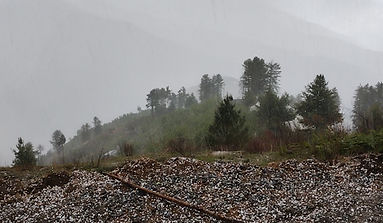
Hailstorms are among the most destructive weather events affecting India's horticulture and high-value crops. In a matter of minutes, large hailstones can damage fruits, flowers, leaves, branches, and entire crops—particularly during critical flowering and harvesting stages. For farmers, a severe hailstorm can mean months of cultivation expenses lost in minutes. Beyond direct crop loss, farmers may face reduced fruit quality, lower market prices, damaged trees, increased recovery costs, and loss of income for the following season. At a larger scale, recurring hail damage can affect horticultural supply, farmer livelihoods, rural employment, and food-market stability, creating economic losses that extend beyond individual farms. The lack of a locally manufactured, cost-effective, and fuel-efficient hail mitigation technology leaves farmers exposed to repeated losses. Furthermore, the absence of integrated meteorological prediction tools with current systems means firings are often manual, potentially wasting resources or missing critical storm windows.

SOLUTION
Easy to use:
A simple system that uses LPG as fuel, so no worries about gas availability; remote operating system & fast repair and maintenance. Radar & satellite-based weather forecasts give you a warning of hailstorms.
Technology:
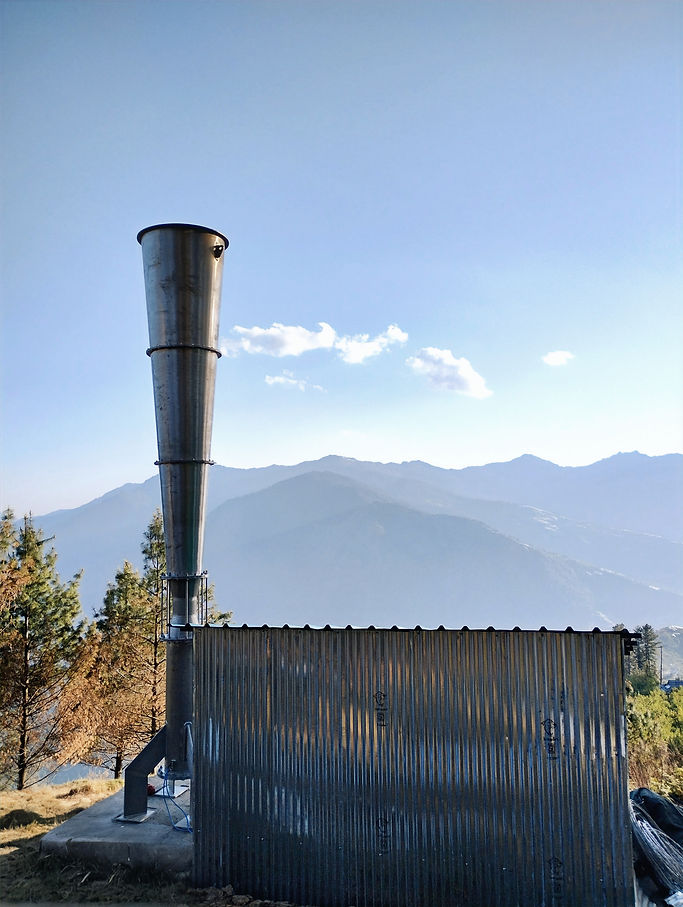
Anti-Hail Gun is a shock vortex ring generator that, with strong acoustic turbulence, disturbs the formation of hailstones inside the cumulonimbus clouds.
Cost savings:
It’s an indigenous technology that's 2-3 times less expensive and 10-20 times more efficient in operation than the imported one.
Features:
A simple system that uses LPG as a fuel, so no worries about gas availability.
Radar & satellite-based weather forecasts give you advance hailstorm warnings.
How the Anti-Hail Gun System Works
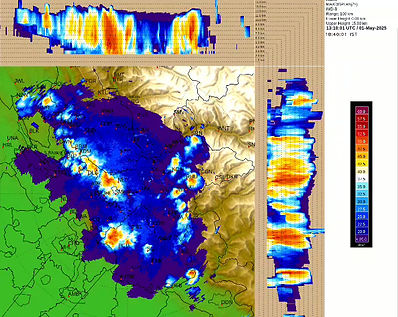
The Anti-Hail Gun System is designed to mitigate hail formation within cumulonimbus clouds by generating a continuous sequence of supersonic shock vortex rings traveling at an exit velocity of approximately 600–800 m/s. These shock waves propagate into the cloud and create acoustic turbulence intended to interfere with the conditions that support hailstone formation. IMD Shimla radar data can be used to identify early signs of developing convective activity associated with potential hail formation. This information enables Anti-Hail Gun operators to receive an advance alert and prepare the system before the hailstorm reaches the protected area. Once activated, the system generates shock-wave pulses at approximately 10-second intervals, continuing during the critical period of cloud development.
OUR INSTALLATIONS
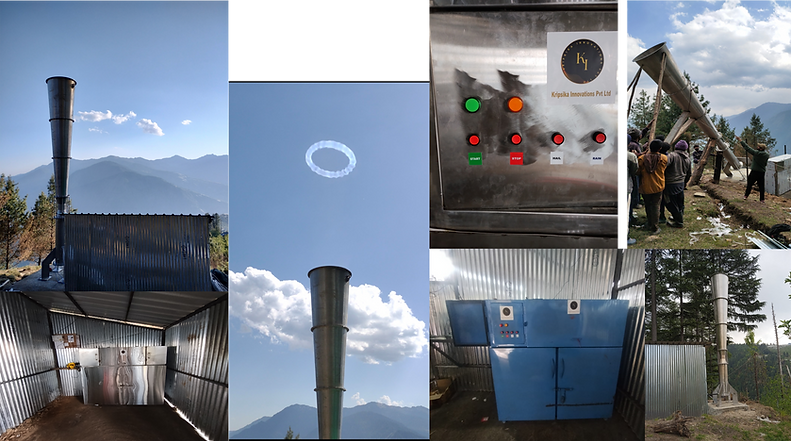
THE ANTI HAIL GUN
Anti-Hail Nets Installed In An Apple Orchads, Shimla, To Protect Crops From Hail Damage


Anti-hail nets are a physical crop-protection solution used in apple orchards to reduce damage from hailstorms. In Himachal Pradesh, hail nets are installed over apple trees to intercept hailstones before they reach the fruit and branches. They can provide effective protection, but their installation requires significant initial investment, supporting structures, and regular maintenance, making them an important alternative to active hail-mitigation technologies such as anti-hail guns.
In The Aviation Sector

Sound & Vortex Ring-Generator For Bird Strike Prevention In Aviation
Technology Overview
We, Kripsika Innovations Pvt. Ltd., in collaboration with IIT Bombay’s Aerospace Engineering Department, are pleased to propose deploying a Sound, Shock, and Vortex Ring Generator system to address the persistent challenge of bird strikes at airports.
Bird strikes remain a significant safety hazard for both civil and defence aviation, resulting in costly engine damage, flight delays, and potential threats to human life. Traditional preventive measures, such as firecrackers, shotguns, and sirens, have shown limited effectiveness and entail various disadvantages, including short range, inconsistent effectiveness, and environmental disturbance.
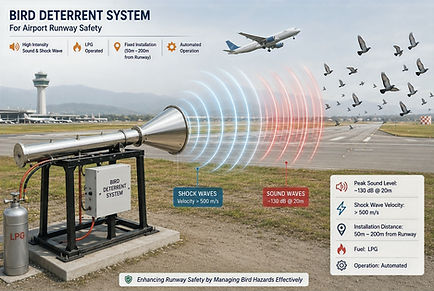
Our Proposed Technology
The Sound and Vortex Ring Generator is an LPG-fueled device that creates a powerful combination of:
-
Strong sound waves (110–130 dB)
-
High-energy shockwave pulse
-
Visible vortex rings travelling 50 to 100 meters
This unique combination makes the system highly effective in dispersing bird flocks from active runways and flight paths.
Advantages over Traditional Methods
The adoption of this next-generation bird strike prevention system will provide airports with a safe, sustainable, and highly effective solution to one of aviation’s most persistent challenges. We are confident that our Sound and Vortex Ring Generator will significantly reduce bird strike incidents, safeguard aircraft engines, and ensure uninterrupted airport operations.
1. Non-lethal & Safe – The system causes no harm to birds or humans, even if fired directly. It only creates a deterrent effect through a vortex ring and sound waves. 2. Economical – Operating on LPG, it is 20 times more cost-effective compared to continuous use of firecrackers and firearms. 3. Durable Design – Built with weather-resistant materials for long-term operation in airport conditions. 4. High Effectiveness – The combination of sound waves and vortex rings reaches farther and is more efficient in breaking bird formations compared to conventional noise-based systems. 5. Movable Deployment – The system can be mounted on jeeps or movable platforms for flexible usage. 6. Minimal Airspace Impact – The shock and vortex effect is localised and temporary, ensuring it does not interfere with aircraft aerodynamics during takeoff and landing.
Proposed Implementation
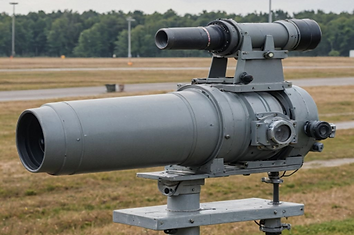

-
Fixed Installations: At critical runway points and bird-attraction zones.
-
Mobile Units: Mounted on jeeps for rapid response in case of sudden bird congregation.
-
Integration with AI Monitoring: Future upgrades will include camera-based bird detection for automatic operation.
-
Shockwave Generation: Produces a sound shockwave of 110–130 dB, effective over 100- 200 m, depending on the operational requirement.
-
Fuel Efficiency: Operates on Liquefied Petroleum Gas (LPG), making it 20 times more economical than conventional bird-scare methods such as pyrotechnics or firecrackers.
-
Bird Safety: The device does not physically harm birds; it only generates sound and shock rings that safely scare them away from sensitive areas.
-
Deployment Options:
-
Fixed installation near runways.
-
Mobile mounting on E-cart or airport vehicles for flexible coverage.
-
-
Durability: Manufactured with weather-resistant, long-lasting materials, ensuring high reliability in diverse climatic conditions.
-
Cost Efficiency: Each blast costs only ₹0.50 to ₹1.00, ensuring long-term affordability.
-
Adjustable Intensity: Sound intensity can be adjusted in real-time as needed.
-
Dual Action: Unlike older propane guns, this device combines both high-decibel sound and Shock Vortex Ring for maximum effectiveness.
-
Environmentally Safer: Generates minimal pollutants compared to traditional methods like shotguns and firecrackers.
About
The Innovation
Bird strikes remain one of the most critical challenges in the aviation sector, particularly during the take-off and landing phases of aircraft operations. These incidents can result in severe engine damage, endanger passenger safety, and lead to substantial financial losses for airlines and airport operators. Bird problems aren’t limited to active runways, either; hangars housing planes are also vigilant in preventing birds from perching on, roosting in, and especially pooping on planes, as bird excrement is highly acidic and can erode a plane's exterior. Hangars generally scare off birds by placing realistic owl figurines in the space, but high-tech alternatives, like machines circulating air scented with aromas that repel birds, also exist and are even in use at airports like Chicago-O'Hare

Bird Management at Airports
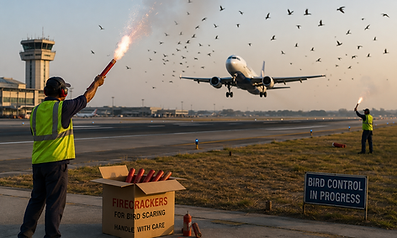
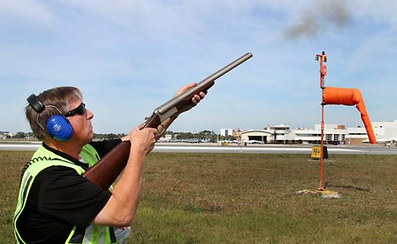
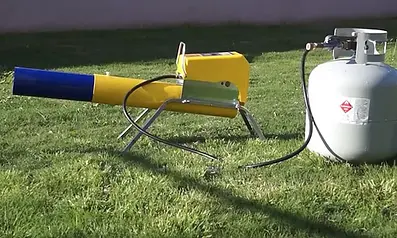
Bird strikes are one of the most common and dangerous hazards faced by airports worldwide. To protect aircraft engines and ensure safe operations during takeoff and landing, airports have historically employed various methods to deter birds from runways and surrounding areas. Some traditional methods used for keeping birds away from the runway are as follows:
-
Firecrackers
-
Airports often use firecrackers to create loud bangs that startle and disperse birds.
-
While effective in the short term, the noise quickly becomes less effective as birds adapt to it. This also pollutes the air & causes fire incidents in dry grass.
2. Shotguns and Blank Cartridges
-
In some regions, shotguns or rifles with blank cartridges are used to generate noise that scares birds away.
-
This creates an immediate reaction but raises safety, environmental, and ethical concerns.
3. Gas Cannons
-
Stationary cannons that generate powerful sounds (up to 100 dB) at intervals, sometimes motion-activated or remote-controlled.
-
Often used in combination with other visual or sound-based deterrents to combat habituation.
Traditional Bird Control Methods
Disadvantages of Traditional Methods
Short-term Effectiveness: Birds become habituated to repeated sounds.
-
Pollution: Firecrackers emit smoke and chemical pollutants that harm the environment.
-
Safety Risks: Handling explosives or firearms near airports can endanger staff and operations.
-
Operational Inefficiency: Requires manual deployment, increasing labour and costs.
-
Disturbance: Can disturb nearby communities due to continuous noise pollution.